Beyond Keywords: How to Create Content That AI Engines Actually Use
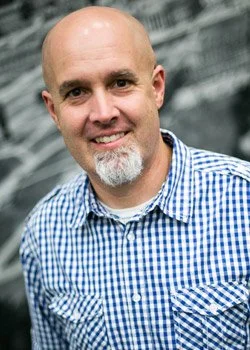
By Brandon Moore, Ed.D.
If you have been doing digital marketing for a college or university for any length of time, you know how much of the work revolves around search engine optimization. The SEO-focused work of keywords, metadata, page titles, and backlinks has been the foundation of web content strategy for years, and it still matters. But something has shifted in how people find information online, and if you are not paying attention to it, your institution may be missing a growing portion of the conversation.
The shift is toward AI-powered search. Tools like Google AI Overviews, Perplexity, and ChatGPT are increasingly becoming the first stop for people looking for answers, not just links. When a prospective student asks an AI engine "what is it like to attend a small liberal arts college," they are not looking for a list of websites to click through. They are looking for an answer. The question for your institution is whether your content is the one providing it.
This is where Answer Engine Optimization (AEO) and Generative Engine Optimization (GEO) come in. AEO focuses on structuring content so that AI and search engines can extract direct answers from it. GEO focuses on ensuring your content is the source that generative AI tools draw from when synthesizing a response. These are not replacements for SEO, but rather additions to it. And they require a different kind of content than most college websites currently publish.
Here is how I think about approaching this work practically.

Start with the right topics before you open an AI tool
The instinct when adding AI to a content workflow is to start generating. Resist it. The most important work happens before any content is written.
AEO and GEO favor long-tail conversational queries or specific, question-based searches that reflect how people actually talk to AI engines. These are different from the shorter, more transactional keywords that drive traditional SEO. A traditional SEO keyword might be "liberal arts college Ohio." An AEO-friendly query might be "what makes a liberal arts education different from a university education" or "how does financial aid work at a small private college."
The good news is that these two approaches are complementary, not competing. Your existing keyword strategy gives you a foundation. AEO and GEO extend it by going deeper on the topics that matter most to your institution and your audiences.
For most small colleges, those topics will be enrollment-focused. Think about the questions a prospective student or parent is asking an AI engine before they ever visit your website. What is the campus culture like? What career outcomes do graduates experience? How does your financial aid process work? How does your institution approach faith and academics together? These are exactly the kinds of questions that AI engines are being asked. It can only benefit your institution to publish thoughtful, substantive content that addresses these questions.
Start by identifying five to ten questions that are directly aligned with your institution's enrollment goals and strategic messaging. These become your content targets.
Do not be afraid to go deep
Most content on a college or university website is built for a specific user action. Find a deadline. Submit an application. Pay a deposit. That kind of content is essential, but it is not what AEO and GEO reward. AI engines are looking for content that actually answers questions comprehensively, clearly, and with enough depth to be useful.
This is where AI can genuinely help. Create long-form content with 1,000 to 2,000 words as a starting point, but different topics may require more or less. This type of content requires more research and writing time than most content teams can realistically budget for every page. AI tools can help accelerate that process by pulling together information, generating draft structures, and exploring angles that a single writer might not have time to develop fully.
That said, length and depth are not the same thing. Content that is long but thin will not perform well in AI search any more than it performs well in traditional search. The goal is substantive depth on topics your institution actually has expertise in, not padded word counts.
Always keep a human expert in the loop
AI-generated content has a real limitation that matters especially for academic institutions: it can sound authoritative while being factually imprecise. This is not a reason to avoid AI in your content workflow. It is a reason to build a review process that takes it seriously.
Every piece of AEO and GEO content your institution publishes should go through a subject matter expert before it goes live. The good news is that small colleges have subject matter experts everywhere. Faculty, staff, administrators, and student services professionals know their areas deeply and can catch the places where AI has generalized, oversimplified, or gotten something wrong.
If the content starts to move into territory that your content team does not feel confident reviewing, that is a signal. Either bring in someone who can review it with authority, or adjust the scope of the content to stay within what your team and your experts can confidently validate. Publishing content that is wrong does more damage than publishing nothing, even if it is well-written and well-structured.
Validate everything
This connects directly to the expert review point, but it deserves its own emphasis. Before anything goes live, verify the facts. Check claims against reliable sources. If you are writing about outcomes data, link to the data. If you are referencing research or institutional statistics, cite them.
Links to external sources may or may not help AI treat your content as more credible. But those links to external sources will help your readers, and that practice aligns naturally with the academic practice and culture. Cite your sources and provide links where it is useful. Your readers and your credibility will both benefit.
Set expectations with your team
Before you publish your first AEO or GEO content page, have a conversation with everyone involved in the production process, including designers, content managers, and developers. These pages are going to look different from most of what is currently on your website.
Where a typical web page is scannable, action-oriented, and relatively brief, an AEO/GEO page is long, content-dense, and structured around answering questions thoroughly. Designers who are used to building pages around visual hierarchy and calls to action will need context for why this page looks the way it does. Content managers who are used to trimming word counts will need to understand why length is intentional here. Developers may need provide content management system support for type of structure this content requires.
This is not a difficult conversation, but skipping it creates friction later. A page that gets edited down to fit a design template or shortened because it felt too long has lost the thing that made it valuable in the first place.
Publish, submit, and monitor
Once a page is live, submit it to search indexes. Google Search Console and Bing Webmaster Tools are the two essential ones. Brave Search is an independent index worth including as well, as it is growing in relevance and operates independently of Google's index.
Then run your own tests over time. Search for the questions your content is designed to answer in Google, Bing, Perplexity, and ChatGPT. See what comes up. Note whether your institution's content appears in AI-generated responses, and how it is characterized when it does. This is not a one-time check. AI search results shift as indexes update and as new content enters the space. Building a regular monitoring habit, even if it is simple, gives you the signal you need to know whether your investment is working.
A final thought
The institutions that will benefit most from AEO and GEO are not necessarily the ones with the largest content teams or the biggest budgets. They are the ones that take the time to think carefully about what they actually know, identify the questions their audiences are asking, and publish substantive, accurate content that answers those questions well.
That is work that small colleges can do. It requires thoughtfulness, institutional knowledge, and a willingness to approach content differently than you have before. But the opportunity is real, and the institutions that move on it now will have a meaningful head start on those that wait.
Brandon Moore, Ed.D. is a web strategy and digital marketing consultant with 15+ years of experience working with higher education institutions and mission-driven organizations. He is the founder of Speak LLC.